-
this is just crazy:
Scientists extract images directly from brainQuoteResearchers from Japan’s ATR Computational Neuroscience Laboratories have developed new brain analysis technology that can reconstruct the images inside a person’s mind and display them on a computer monitor, it was announced on December 11. According to the researchers, further development of the technology may soon make it possible to view other people’s dreams while they sleep.
The scientists were able to reconstruct various images viewed by a person by analyzing changes in their cerebral blood flow. Using a functional magnetic resonance imaging (fMRI) machine, the researchers first mapped the blood flow changes that occurred in the cerebral visual cortex as subjects viewed various images held in front of their eyes. Subjects were shown 400 random 10 x 10 pixel black-and-white images for a period of 12 seconds each. While the fMRI machine monitored the changes in brain activity, a computer crunched the data and learned to associate the various changes in brain activity with the different image designs.
Then, when the test subjects were shown a completely new set of images, such as the letters N-E-U-R-O-N, the system was able to reconstruct and display what the test subjects were viewing based solely on their brain activity.
For now, the system is only able to reproduce simple black-and-white images. But Dr. Kang Cheng, a researcher from the RIKEN Brain Science Institute, suggests that improving the measurement accuracy will make it possible to reproduce images in color.
“These results are a breakthrough in terms of understanding brain activity,” says Dr. Cheng. “In as little as 10 years, advances in this field of research may make it possible to read a person’s thoughts with some degree of accuracy.”
The researchers suggest a future version of this technology could be applied in the fields of art and design — particularly if it becomes possible to quickly and accurately access images existing inside an artist’s head. The technology might also lead to new treatments for conditions such as psychiatric disorders involving hallucinations, by providing doctors a direct window into the mind of the patient.
ATR chief researcher Yukiyasu Kamitani says, “This technology can also be applied to senses other than vision. In the future, it may also become possible to read feelings and complicated emotional states.”
The research results appear in the December 11 issue of US science journal Neuron.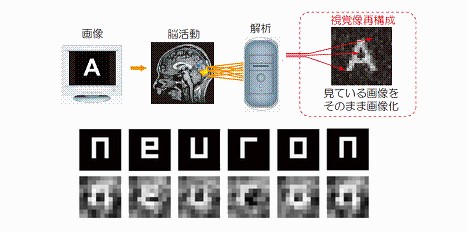
-
-
anarchy: Always a good decision.Quote
December 16: General Interest
1773 : The Boston Tea Party
In Boston Harbor, a group of Massachusetts colonists disguised as Mohawk Indians board three British tea ships and dump 342 chests of tea into the harbor.
The midnight raid, popularly known as the "Boston Tea Party," was in protest of the British Parliament\'s Tea Act of 1773, a bill designed to save the faltering East India Company by greatly lowering its tea tax and granting it a virtual monopoly on the American tea trade. The low tax allowed the East India Company to undercut even tea smuggled into America by Dutch traders, and many colonists viewed the act as another example of taxation tyranny.
When three tea ships, the Dartmouth, the Eleanor, and the Beaver, arrived in Boston Harbor, the colonists demanded that the tea be returned to England. After Massachusetts Governor Thomas Hutchinson refused, Patriot leader Samuel Adams organized the "tea party" with about 60 members of the Sons of Liberty, his underground resistance group. The British tea dumped in Boston Harbor on the night of December 16 was valued at some $18,000.
Parliament, outraged by the blatant destruction of British property, enacted the Coercive Acts, also known as the Intolerable Acts, in 1774. The Coercive Acts closed Boston to merchant shipping, established formal British military rule in Massachusetts, made British officials immune to criminal prosecution in America, and required colonists to quarter British troops. The colonists subsequently called the first Continental Congress to consider a united American resistance to the British.
no offense boombox.
-
-
take that tea sippers.....
-
-
Quote from: FrankZappa;213480
this is just crazy:
Scientists extract images directly from brainQuoteResearchers from Japan?s ATR Computational Neuroscience Laboratories have developed new brain analysis technology that can reconstruct the images inside a person?s mind and display them on a computer monitor, it was announced on December 11. According to the researchers, further development of the technology may soon make it possible to view other people?s dreams while they sleep.
The scientists were able to reconstruct various images viewed by a person by analyzing changes in their cerebral blood flow. Using a functional magnetic resonance imaging (fMRI) machine, the researchers first mapped the blood flow changes that occurred in the cerebral visual cortex as subjects viewed various images held in front of their eyes. Subjects were shown 400 random 10 x 10 pixel black-and-white images for a period of 12 seconds each. While the fMRI machine monitored the changes in brain activity, a computer crunched the data and learned to associate the various changes in brain activity with the different image designs.
Then, when the test subjects were shown a completely new set of images, such as the letters N-E-U-R-O-N, the system was able to reconstruct and display what the test subjects were viewing based solely on their brain activity.
For now, the system is only able to reproduce simple black-and-white images. But Dr. Kang Cheng, a researcher from the RIKEN Brain Science Institute, suggests that improving the measurement accuracy will make it possible to reproduce images in color.
?These results are a breakthrough in terms of understanding brain activity,? says Dr. Cheng. ?In as little as 10 years, advances in this field of research may make it possible to read a person?s thoughts with some degree of accuracy.?
The researchers suggest a future version of this technology could be applied in the fields of art and design ? particularly if it becomes possible to quickly and accurately access images existing inside an artist?s head. The technology might also lead to new treatments for conditions such as psychiatric disorders involving hallucinations, by providing doctors a direct window into the mind of the patient.
ATR chief researcher Yukiyasu Kamitani says, ?This technology can also be applied to senses other than vision. In the future, it may also become possible to read feelings and complicated emotional states.?
The research results appear in the December 11 issue of US science journal Neuron.
Imagine what this could do to the legal system. -
-
or police interrogations
-
-
could be a big soary chip to some marriages, as well...
-
-
technology is ser
-
-
well, before you start hooking each other up to brain scanners, remember the original plan from nasa said that with the current support and backing levels, we will land a man on the moon, set up bases there and have manned trips to mars within 10 years. That was in the mid 60\'s. Funny what can happen once the funding falls through.
thanks nixon. -
-
Quote
BOSTON – There were 124 passengers on Northwest Airlines Flight 59 when it left the Netherlands. There were 125 when it landed in Boston.
Phil Orlandella, a spokesman for Logan International Airport, says a woman went into labor and gave birth to an apparently healthy baby girl over the Atlantic Ocean on Wednesday during the eight-hour flight from Amsterdam.
Orlandella said a doctor and a paramedic who were on the flight assisted in the birth. He said the plane landed without incident about 10:30 a.m., and the mother and baby were immediately taken to Massachusetts General Hospital.
Orlandella said he did not know the nationality of the mother, but said for customs\' purposes the baby was considered a Canadian citizen because she was born over Canada\'s airspace. -
-
Not weird, just funny:
Two rescued teenagers say they were idiots for getting lost for three days in rugged bushland after trying to sneak into a Victorian music festival without tickets.
Harry Wild and Ryan Hurley, both 19, had been trying to find a back way into the Falls Music Festival, near Lorne on the Great Ocean Road.
But their plans went awry when the pair lost mobile phone reception and ended up getting lost.
The youths have thanked police and rescuers for their efforts.
"We can\'t thank them enough,\'\' Mr Wild said at a press conference this afternoon, the Geelong Advertiser reports.
"We know we are idiots, we think we are so silly. I just what to thank everyone who was involved in the process.\'\'
The youths said they fashioned a shelter by leaning branches and foliage against a large log and using leaves for bedding.
The pair huddled together through three cold, wet nights.
"Very close. Very close. It was nice and cosy," Mr Hurley said.
Mr Wild said: "All night. I had my hands inside his little jumper to keep my hands warm."
They had no food but drank water from a nearby creek.
They were found at 10.30am in a clearing by a police helicopter. Rescuers trekked 400 metres through thick terrain to meet them.
Senior Constable Greg Bliss, from the Search and Rescue Squad, said the youths did the right thing by staying in one place.
"They built a shelter, sought water when they needed it and stayed together,\'\' he said.
"In terms of their behaviour, they ticked every box we would expect from someone lost in the bush.\'\'
The parents of the youths said they were relieved and grateful.
"It\'s a fantastic feeling,\'\' Jennifer Wild said.
Police inspector Bill Weatherly, who helped co-ordinate the search, said it was fantastic to see sons and parents reunited.
"Very emotional, a lot of hugs, tears from the mums and even from the dads," Insp Weatherly said.
Police said the teenagers used a mobile phone to contact them about 10am (AEDT) on Tuesday, saying they were lost after trying to sneak into the music festival. This was followed by an exchange of text messages.
The texts stopped about 2.30pm, leading police to suspect the phone had been switched off or the battery gone flat.
Attempts to find the youths using the phone\'s signal failed.
http://www.news.com.au/story/0,27574,24862245-1243,00.html -
-
Quote from: FrankZappa;215032Quote
Orlandella said he did not know the nationality of the mother, but said for customs\' purposes the baby was considered a Canadian citizen because she was born over Canada\'s airspace.
I\'m telling you, Canada is trying to take over the world. -
-
that line was the first thing I though of while reading it and the answer surprised me when I read it. you forget that the countries claim ownership for like 7 miles out from the coasts.
-
-
victorian music festival? like late 1800s tunage?
-
-
I was wondering the same thing, and what the festival goers\' attire might look like.

-
-
Quote from: FrankZappa;215179
that line was the first thing I though of while reading it and the answer surprised me when I read it. you forget that the countries claim ownership for like 7 miles out from the coasts.
Errr...I thought it was 90 miles -